
What Is Extremity Adjusting?
Extremity adjusting focuses on the joints outside your spine for example your shoulders, elbows, wrists, hips, knees, ankles, and feet. Just like spinal joints, these areas can become restricted, painful, or dysfunctional, affecting how you move and feel during your daily activities.
Most people don't realize that a chiropractor can treat these areas, but extremity adjusting is often the missing piece in getting people back to their favorite activities pain-free.
Why Your Arms and Legs Matter for Overall Health
Your body works as one connected system. When your shoulder doesn't move properly, it affects your neck and upper back. When your ankle is stiff from an old sprain, it changes how you walk, which can eventually cause knee, hip, or even lower back pain.
This is especially important for active people in the Coachella Valley. Whether you're perfecting your golf swing, hiking the Indian Canyons, playing pickleball, or training at the gym, every movement depends on multiple joints working together seamlessly.
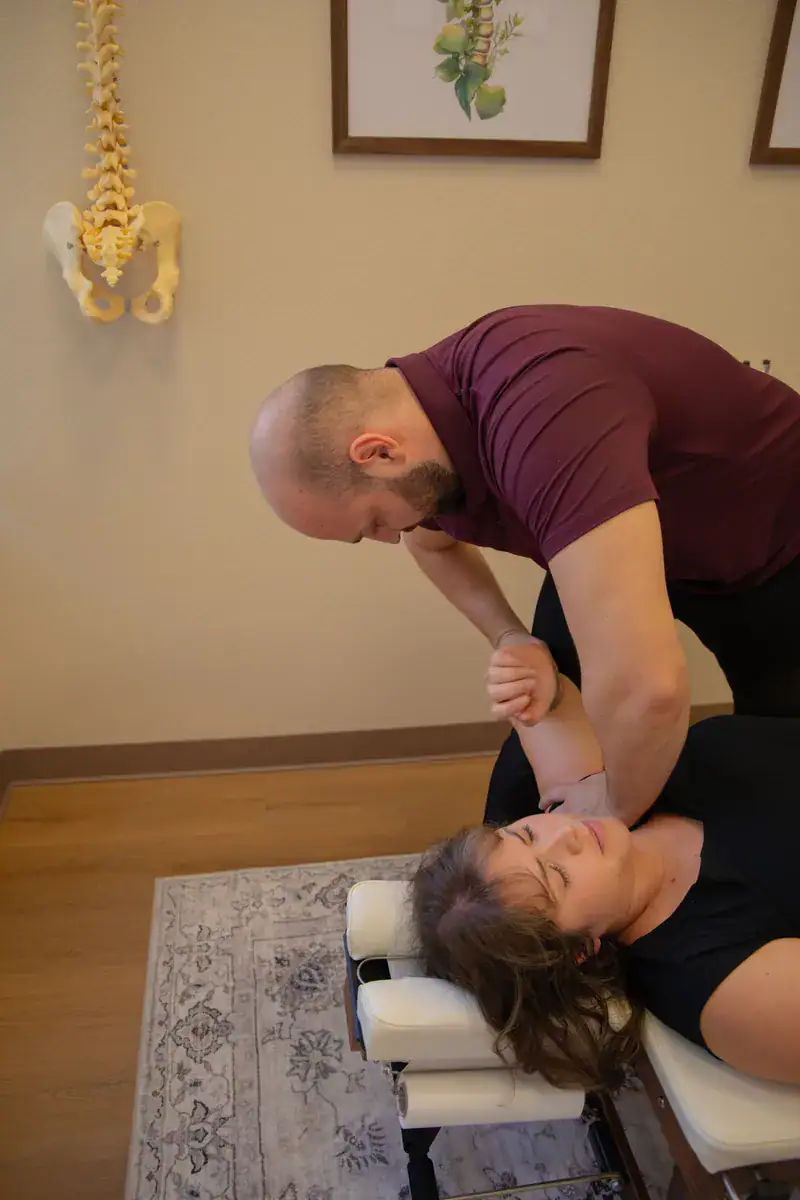
Extremity adjusting focuses on restoring proper motion and function to joints outside of the spine, such as the shoulder, elbow, wrist, hip, knee, and ankle. For active people like golfers, tennis players, and hikers, these joints bear the brunt of repetitive stress. Adjusting these areas is crucial because dysfunction in an extremity joint (e.g., a restricted ankle) can lead to pain and compensatory movement in the spine, reducing your overall performance.
The goal is the same, restoring function, but the technique is different. Extremity adjustments are often lighter, more targeted, and involve precise contact points specific to the limb joint (e.g., adjusting the small bones in the wrist or foot). They require a specialized thorough examination to diagnose the exact motion restriction and instability.
Absolutely. Extremity adjusting is rarely done in isolation. Your personalized treatment plan will almost always blend the adjustment with soft tissue work (like dynamic cupping), Shockwave Therapy, or PEMF Therapy to address tendon and ligament issues, and specific corrective exercises to stabilize the joint and prevent the issue from returning.
Yes. Optimal sports performance relies on efficient movement patterns. If a joint like the hip or shoulder is stiff or unstable, the body compensates, leading to poor form (like a golf swing fault or an inefficient stride while hiking). By restoring proper joint mechanics, we can help reduce energy leaks, improve power transfer, and decrease your risk of injury, allowing you to live your active life to the fullest.

Unsure if my approach can address your unique symptoms or help you achieve your movement goals? Schedule a free video or phone consultation with Dr. Matt. This brief, no-pressure call is a perfect opportunity to discuss your needs and see how our holistic chiropractic approach in Indian Wells can make a difference.